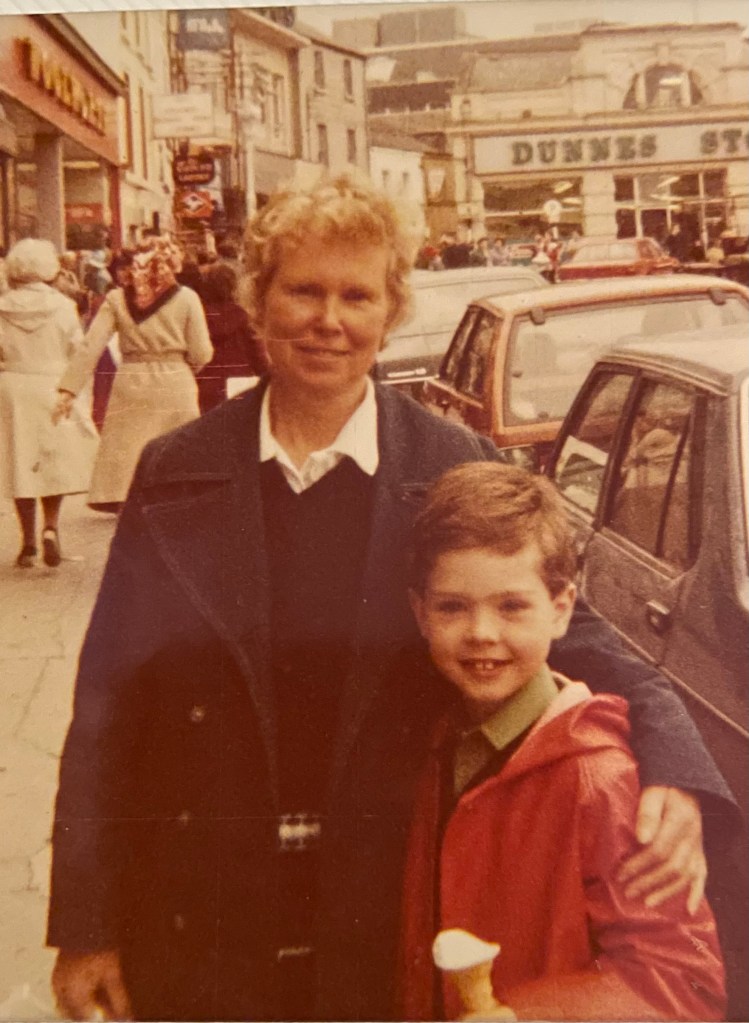
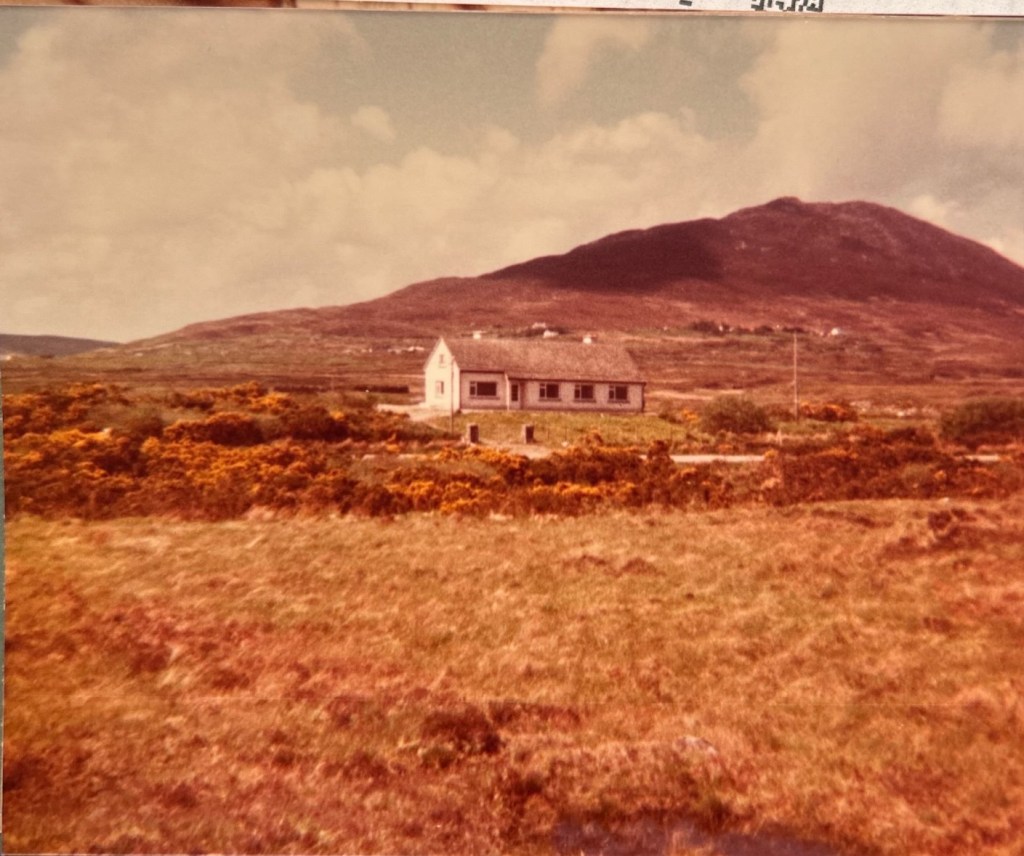
My earliest memory of Ireland takes place in the old house of my great-uncle Sean Connolly. I was a little boy at the time. It was night and I was in bed with my mother. The wind howled and cold air seeped through uninsulated walls. We had a red rubber hot water bottle at the end of the bed to keep our feet warm. Night in rural Ireland is almost completely enveloped in pitch black. There is a purity to the blinding darkness I don’t recall anywhere else, maybe because early memories are so deeply engraved. We were in the village of Barna in County Galway on the doorstep of Connemara. Barna wasn’t the built-up suburb of Galway it is now. The village was only speckled with houses. My great uncle’s property sat alone on a large tract of land that resided less than a mile from the Atlantic Ocean.
For the uninitiated, Connemara is a unique place within the island of Ireland. There is a savage, stark beauty to the largely treeless land made of rock, grass, bog, and the ocean. Connemara is sparsely populated and one of the last strongholds of the Irish language. The area is popular with tourists from all over Europe who come to explore and admire this isolated place. Connemara is brutally simple yet enchanting. It is the land of my mother and father.
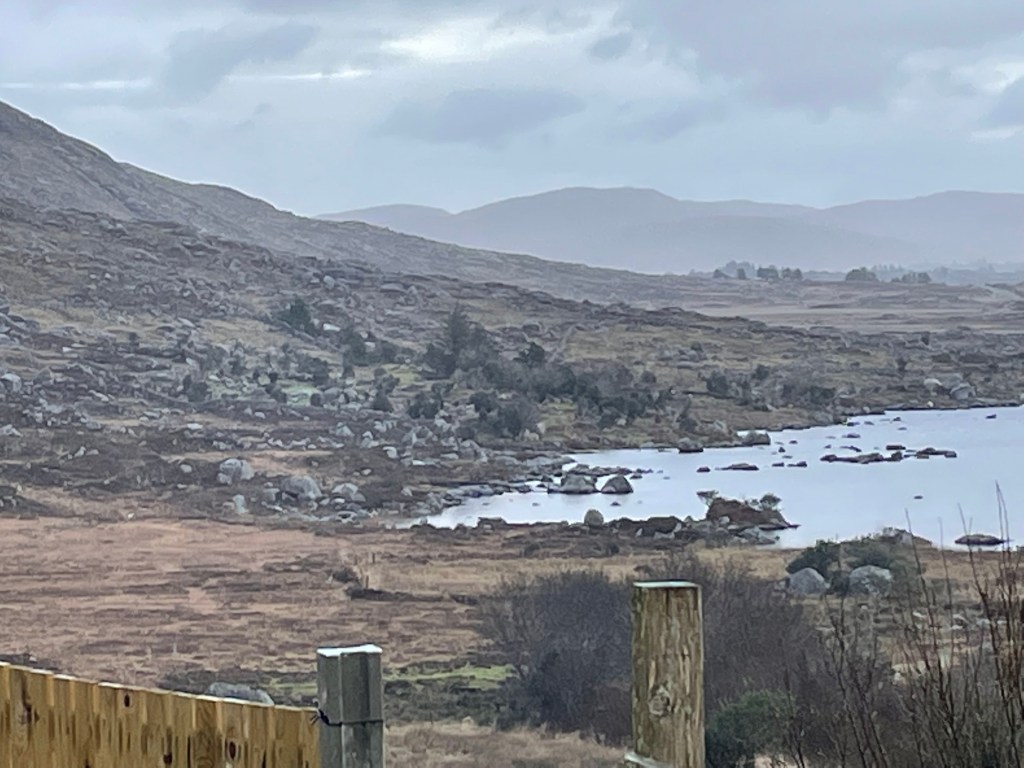
How on earth had I ended up here in this remote place? It was driven by the instincts of survival. Mom had fled with me from a turbulent domestic situation in Chicago in early 1979 and decided to travel back to the land of her youth. Apparently, Mom had travelled back with me to Ireland several times prior, but only for short periods of time. This time was different, and a one-way ticket had been purchased. She was nearly 49 years of age, quite old to have ideas of starting over. I was 4 years of age and only a few days prior would have been attending Camelot Preschool in Chicago’s Roger’s Park. As one might imagine, Barna and Chicago did not have a lot in common.
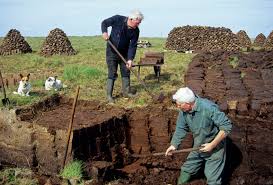
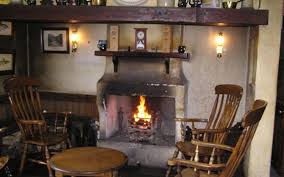
My great uncle Sean’s house was likely built around the turn of the century. It was a solid structure built to last. Old Sean was a bachelor, and the interior of the home probably had not been updated since he had moved in. The turf-burning range(stove) that resided in the front room/kitchen area was multipurpose. The range was used for cooking and boiling water. It was also used as the primary source of warmth, the Connemara version of a fireplace. Some of you might be wondering what exactly is turf. Turf is the peat that is dug up from the bogs in Connemara. It is cut into rectangular bricks and then dried out. It was widely used as a substitute for wood. It burns longer than wood and emits the most amazing aroma. I love the unique, smoky odor of turf. It is unlike anything I have ever encountered anywhere else. The smell of burning turf is just magic and a quintessential element of Western Ireland.
It does indeed rain an awful lot in Ireland. The frequent rain is responsible for the incredibly green fields but also the damp cold that sinks into your bones during winter. The wetness penetrates the ground to soften the earth into what Americans call mud, but the Irish call muck. In the fields it abounds underfoot. Muck is the more apt word as there seems to be a thicker, more sludgy quality to the wet earth than in the States. Wellies (tall rubber boots) are obligatory footwear if you walk the fields in Galway. Your foot can easily sink 6 inches or more when crossing a field. On a few occasions, my rubber boot would get stuck in the muck and in trying to extract myself, I would pull with such force that my foot and sock came out of the boot, while the boot stayed stuck in the muck!
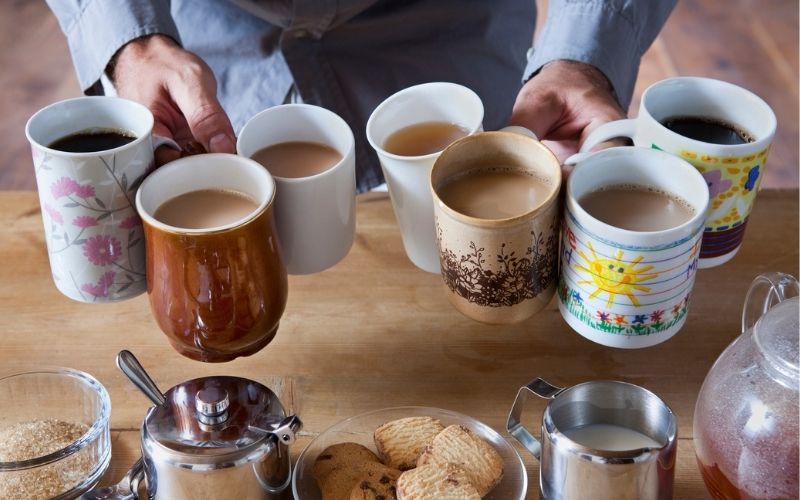
It is no wonder that the people living in these elements drink 6-8 cups of hot tea daily. This isn’t the herbal teas that Americans commonly drink. This is black tea with milk and sugar, borne out of the British tradition. Tea is a fundamental part of the Irish existence, an ever-present, reassuring presence to get one through the day. Get up in the morning and throw on the kettle for a couple of cups. Then have a cup or two with lunch. In the afternoon, before dinner, have a cup with a biscuit. Maybe in the evening as well while watching the telly. That’s how it is. Tea is a ritualistic, habitual, and therapeutic part of Irish life.
Uncle Sean had an old dog named Shep. He was a medium-sized herding dog of some kind with light hair and a tired, broken-down way about him. He didn’t take much notice of Mom and me. But he was Shep and a fitting presence on the property. There was also a cat that I was keen on playing with. The crabby tabby wanted nothing to do with me. I recall reaching under a chair to try and pet the cat and getting my hand scratched up for my trouble. The cat clearly took after its owner.
Sean was a bit of an old crab who had spent all his life in the area. In a place where it was hard to make a living, Sean had found a way to do better than most. While many of his siblings had gone to Britain for work, Sean stayed in Galway. He was an entrepreneur of sorts, collecting the winkles by the sea and selling them. I suppose that was a fitting activity for the old crab. By all accounts, he was miserly and clever but not regarded with any affection by locals.
However, he did allow us to stay with him when we arrived from the States. He had an affinity for Mom and a decade earlier, he had broached the subject of passing the property onto her when he passed. This encompassed the house and the 9 acres of land attached to it. At the time, in the early 70’s, Mom had little interest in the proposal. Later in Dublin, when she told her father about the conversation, he stated plainly how foolish she had been not to accept Sean’s idea. She rues that decision to this day.
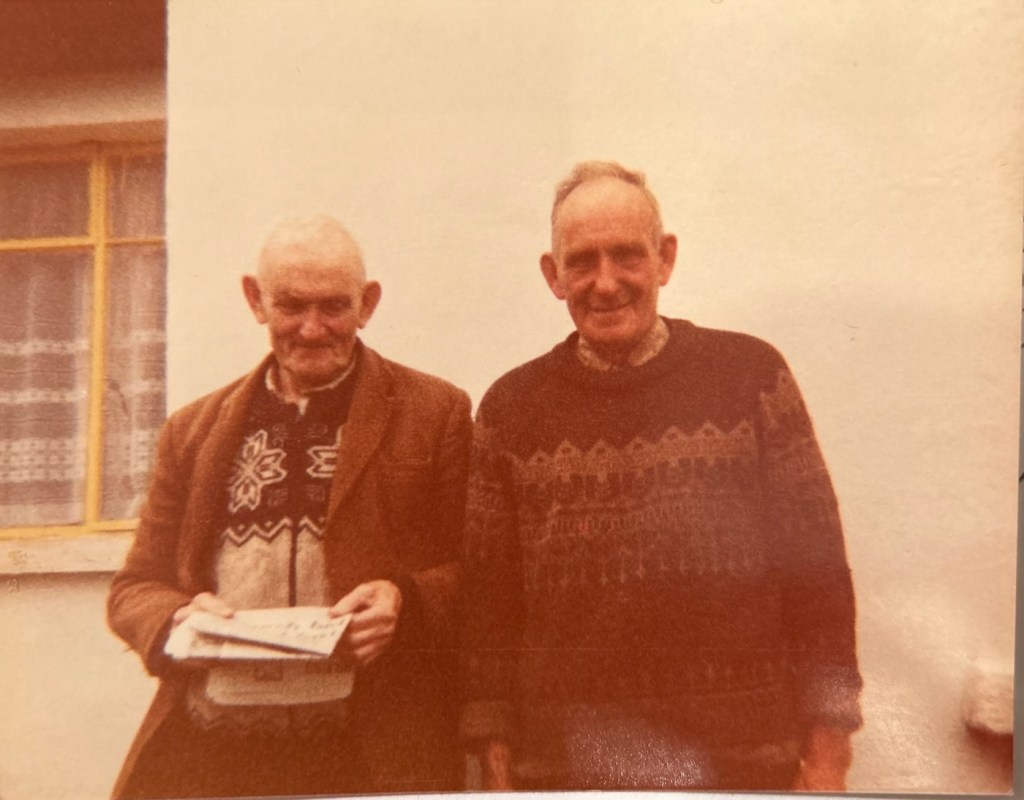
My hazy memories of Ireland in 1979 are primarily centered around Sean’s property. He had a well outside the house. It was unsettling to look down and see how deep the water sat. It was the stuff that reminded you of fairy tales, and the land lent itself to that feeling. The rural setting was so eerily quiet and still. When the sun would make a rare appearance, the way it flickered off the ferns after it had rained, so water would still be dripping off the fauna, was transfixing. I have never since encountered the same kind of absolute stillness and quiet of nature as I did as a very young boy in Western Ireland.
Speaking of ferns, I quickly learned that you had to be careful brushing past them. Ticks commonly took up residence on the foliage and attached themselves to whatever unsuspecting host passed by. On several occasions, Mom would have to get her tweezers to pull the blood-sucking parasites off me. One instance that stands out was when a tick had set up shop in my belly button. The challenge for Mom was getting me to stay still while she tried to extract the creature from such a precarious place. I remember the panic and pain as she poked about, searching for the right angle to get underneath the black bugger and pull it out. Then the feeling of relief once the job was done. Ticks were all over the place. One would commonly see them on cattle and dogs, swelled up engorged with blood. I despised ticks.
There were also loads of frogs. They were certainly a more welcome presence. I would see the amphibians all over Sean’s property. Wherever there was a collection of water, you could be sure to find them and observe their cycle of life from spawn to tadpoles to frogs. I was both disgusted and fascinated when I’d see the spawn all grouped together like some kind of transparent tapioca. Birds were also prominent. Down by the sea, there would be gulls, while further inland there were thrushes and magpies. Perhaps because it was so quiet and still in Barna, I noticed these elements of nature.
My memories from 1979 in Ireland are fragmented and faded. At age 4 I did not attend any type of school in Ireland at that time. Mom would take me with her around Barna and one of the first families we began interacting with were the Faherty’s. We would walk there from Sean’s, taking a left from his property and going down the road until we reached the main coast road. Then it was another left turn until we made our way just past Clark’s grocery shop where we would head left up the inclined road before finally making a right and arriving at the Faherty farm.
The Faherty’s were a happy and energetic family. Farm life seemed to suit them, and I distinctly recall the stables, barns, and chicken coups. There was a buzz of activity and I enjoyed tagging along with the Faherty kids. There was a little girl my age by the name of Sheela and I would run around with her about the place. Sheela had short, brown hair, almost in a Dutch boy style cut and a round, happy face often set with a smile that crinkled her eyes. She wore sweaters and wellies much of the time. I was probably wearing runners.
This was the type of setting where a child wouldn’t need toys to amuse themselves. We’d just be romping around, exploring, chasing, climbing, and keeping ourselves busy with what was around us. It was natural, healthy, and uncomplicated. Mom and Mrs Faherty would pass the time in conversation together. Mom loved having a chat over a cup of tea. She was good company who didn’t try too hard and never overstayed her welcome. Rarely would she arrive empty-handed as a guest, at the very least a package of biscuits was brought for the host.
The conversations in Ireland play out differently and have a different rhythm than those in the States. People seem to be more relaxed, and real value is placed on having a good chat. American conversational language tends to be more transactional and direct. Irish conversation tends to meander a bit more and isn’t necessarily in a rush to get to its point. There is a questioning playfulness and less of an absolute blunt certainty to the tone. Mom never lost her authentic ability to effortlessly keep a conversation flowing.
We had more family in Galway, but not close by. First there were the Connolly’s, who lived out west in Leitir Moir. Patsy and Ann Connolly were in their late 30’s and had lived for 7 years in New York before returning home to take over the family property in Leitir Moir. Mom and I would catch the bus from the coast road next to a field where a couple of horses roamed the pasture. The buses were red with their logo being an Irish Setter in full athletic stretch. It felt like a long ride out to Leitir Moir, at least 30-40 minutes, probably longer. Patsy and Ann had a gaggle of young children. There were plenty of kids around my age to run around with. Dierdre, Collin, Barbara, Kathleen, and Teresa were all fun and good-hearted kids. They welcomed me in amongst them and pulled me into their activities. My most distinct memory of that time would have been Patsy’s high-pitched, silly laugh. He was a kidder and loved to tease me to get a reaction. Patsy’s hair was prematurely white, and he came from solid, physical Connolly stock. He and Mom were cousins and when we travelled out to Leitir Moir, we’d normally stay for a few days. Patsy was always very welcoming and accommodating. There were no fancy airs about the place, but you could count on a cup of tea, some biscuits and a good plate of food for dinner.
I remember how barren the land appeared. Leitir Moir was in Connemara and far less manicured than Barna. The skies always seemed to be grey, and the weather was wet. The dampness seemed to be ever-present. There were no trees, just lots of rocks mixed with patches of grass and plenty of muck. The ocean just behind the house was dark and unsettled. This was my first direct experience with Connemara. This was indeed a simple and hard place.
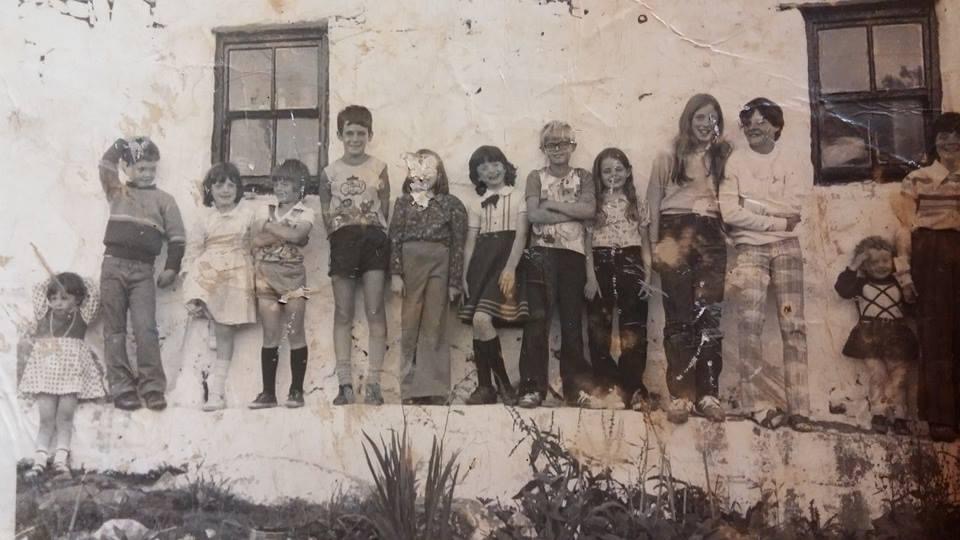
But there were two sides to County Galway. On the far east side of Galway, on the way to Shannon Airport lived the Sullivans. They had a home in the village of Clarinbridge, which was very different to Leitir Moir. The distance is only 50 miles between the two places, but the difference was notable. The land appeared greener, populated with trees and fewer rocks. Everything in general seemed better developed, more modern than out west. The Sullivans had a lovely home on a sizeable tract of land. Mike and Ann Sullivan were cut from a cloth similar to the Connolly’s in that they were welcoming and kind. No surprise there I suppose, since Ann was Patsy’s sister. The Sullivan’s had spent a good deal of time in Chicago but had taken the decision to move back to Ireland. This was due in part for their eldest and developmentally challenged son Michael. From what I understand, their thinking was that the Irish system would take better care of Michael should anything happen to them.
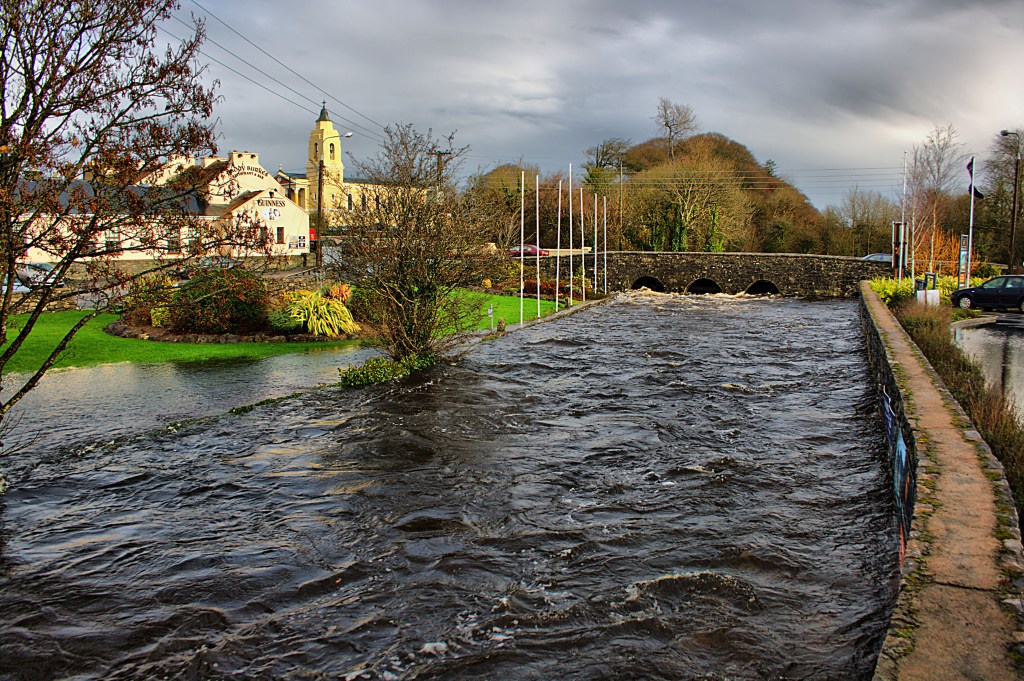
The Sullivan’s two boys, Michael and Brian were already well into their teens. We would spend plenty of time with them over the next few years. They owned an orange Volkswagen Type 2 bus. How could a vehicle like that ever leave the memory? I remember plenty of time inside that VW being driven to various place by Mike.
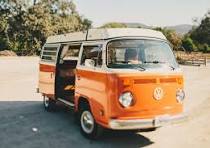
The Sullivans were marvelous hosts and Mom always looked forward to our visits with them. Since they had the shared Chicago experience, I’m sure it gave them even more to talk about together. We would not visit frequently, but it was always pleasant and memorable when we did. However, just as I was getting familiar and settled in Ireland, we left and returned to Chicago.
Chicago/Pittsburgh late 1979-June 1980
Our time in Ireland abruptly concluded sometime in the late autumn of 1979. Mom had decided to give it another go with my father. The two of us flew back to Chicago. Perhaps as a way of establishing a fresh start, we moved from Chicago to Pittsburgh. Mom had ties to Pittsburgh. It was the city she emigrated to in 1949 as a young woman. My half-brother Geoff came with us to work alongside my father in his roofing business. As a young boy, I was delighted to have my brother’s company. Geoff had just turned 20 at the end of December 1979. He was just over 6 feet tall and physically well put together. Geoff, like my other half-siblings, had experienced a chaotic and traumatic childhood filled with domestic violence.
Despite that troubled history, Geoff was an incredibly gentle, kind, and patient big brother. Plainly put, I was a spoilt brat as a young boy. When I was older, Geoff loved to regal me of tales that made me laugh and cringe. As Geoff would recount, there were occasions at the playground when I’d race to the water fountain. I’d have a drink and quench my thirst. Then, while other kids were waiting behind me, I’d remain at the water fountain, just letting the water run over my mouth. I wasn’t drinking water at that point, just monopolizing the water fountain as my own personal property. The other kids would be waiting and growing impatient. My brother would finally have to step in and pull me away from the fountain so that the other kids could have a turn.
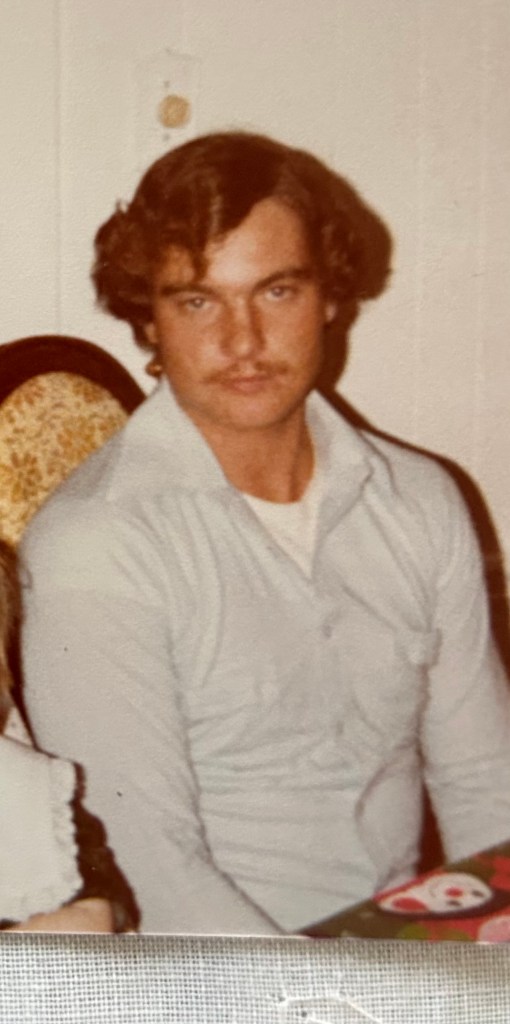

My brother Geoffrey looking very serious. His late 70’s look was no doubt inspired by the old Tampa Bay Buccaneers logo.
On another occasion, a boy had the audacity to arrive at the water fountain before me. I was thirsty and took umbrage at having to wait in turn for my drink. Patience was never a strong suit of mine. Taking matters into my own hands, I grabbed the kid’s hair who was drinking and pulled them away from the fountain to have a drink at my leisure. In the the late 70’s, beginning of the 80’s American kids had plenty of hair. There were no short haircuts. I was able to get a good handful to pull with intent. Geoff would have to once again play peacemaker and intervene so that other children could drink from the water fountain in peace.
My over the top, rude behavior was without a doubt, highly influenced by my love of professional wrestling. Yes, that bastion of refined culture and civility. My first memories of wrestling consisted of Bobo Brazil and Ox Baker taking on a gang of midget wrestlers. I recall my genuine outrage when the midgets were somehow victorious. How could Bobo and Ox Baker lose?! Why didn’t Bobo just pick up the midgets, deliver the “Coco Butt” and be done with it? I didn’t handle the result well at all. The catchy names of the wrestlers also stayed in the memory: Dick the Bruiser, The Crusher, and Classy Freddy Blassy. I was captivated by the bravado, the violent theatrics, and the wildly exaggerated reactions. Geoff would become my sparring partner. Poor Geoff was on the receiving end of hair-pulling, punches, kicks, chokes and any other sort of abuse I could dish out. Truth be told, I think he was highly amused by my antics.
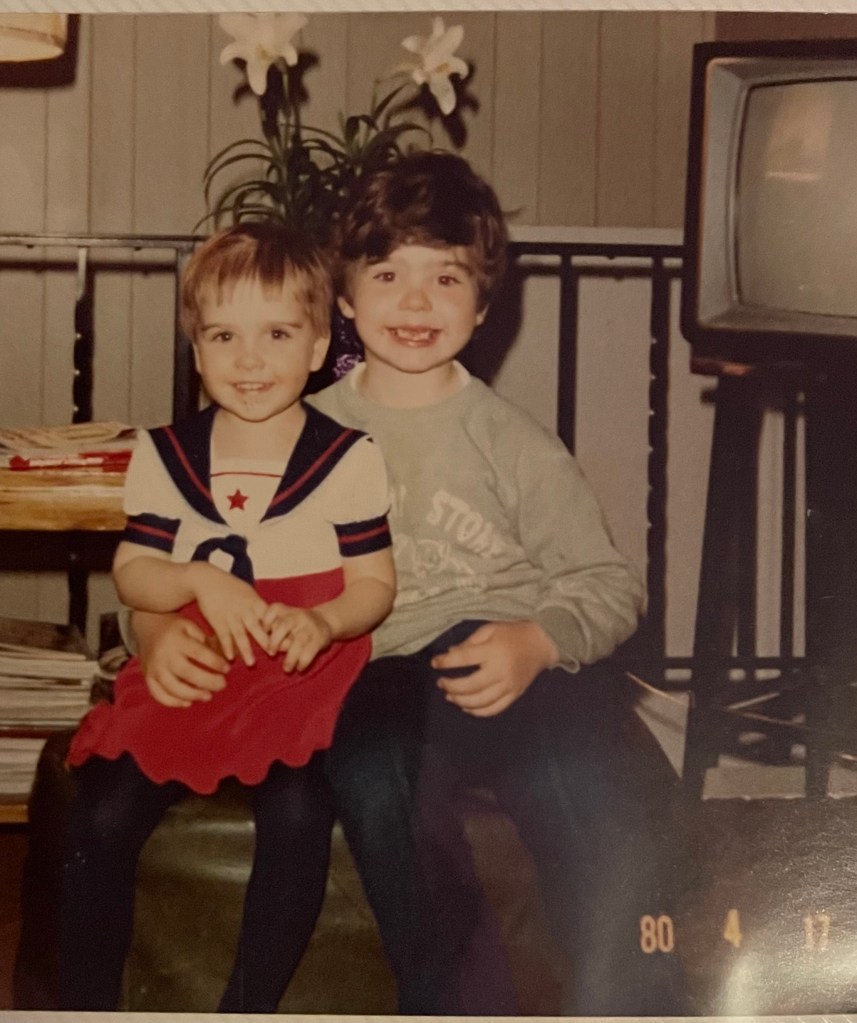
I had a specific and varied set of interests at the outset of 1980. It was monsters, toys, wrestling, and cartoons. Godzilla was my favorite monster. Bobo Brazil was my favorite wrestler, most of my toys were dinosaurs or monsters of some sort. Yogi Bear, Tom & Jerry and Bugs Bunny would have been my preferred cartoons. We settled into the Pittsburgh suburb of Monroeville. There I owned the sidewalks and streets of Monreoville with my Big Wheel. Those plastic three-wheel bikes were all the rage at the time and would create a loud, grinding sound as you peddled along the concrete. I remember stopping by other children’s homes where they had Star Wars toys. I was fascinated by the spaceships and figures. To that point, I had not seen the first film. Empire Strikes Back was released in May of 1980, so I was in the middle of Star Wars marketing mania.
I still was not enrolled in school at the time. That was odd as I had just turned 5. We had a nice, suburban home with a backyard that led straight into the woods. My Father was establishing himself as a roofer in Pittsburgh. I remember the strong smell of tar and the big, white GMC truck he drove for work. There was a special type of soap he used to remove the tar off his hands. Traces of the black, sticky substance were always visible on his strong, workman hands
My memory sees him almost always in a white T-shirt, with tanned skin, dark hair, and a gravelly voice. Lean and fit, he would turn 44 years old in September of 1980. However, I would not be there to celebrate that birthday with him.
In the late spring, my brother had become bored with life in Monroeville. There wasn’t enough work to keep him occupied, and there wasn’t much to do in Monroeville. Geoff decided to return to Chicago. This marked a turning point in the family dynamic. There has been domestic physical abuse in my parent’s relationship going back to Chicago throughout the mid to late 70s. It had been Mom’s primary reason for taking me to Ireland in ’79. My memories of those incidents are patchy, but I did have an awareness. My brother’s presence in Monroeville had functioned as a buffer and a protective barrier for my Mom. Geoff would have been a physical match for my Dad. While Geoff was fundamentally a kind, soft-hearted young man, he was no pushover. I think that me and Geoff have very similar temperaments.
Strangely enough, Geoff and my Dad got on reasonably well. In fact, I’m sure that my Dad was disappointed when Geoff left. Looking back, it could have been an indicator that his roofing business was having trouble taking root. Chicago was a huge market where he was well established. Pittsburgh, while a mid-size city, was smaller with significantly less opportunity. Perhaps my Dad was taken by a bout of melancholy due to the situation. Whatever the case may have been, he decided to have a drink.
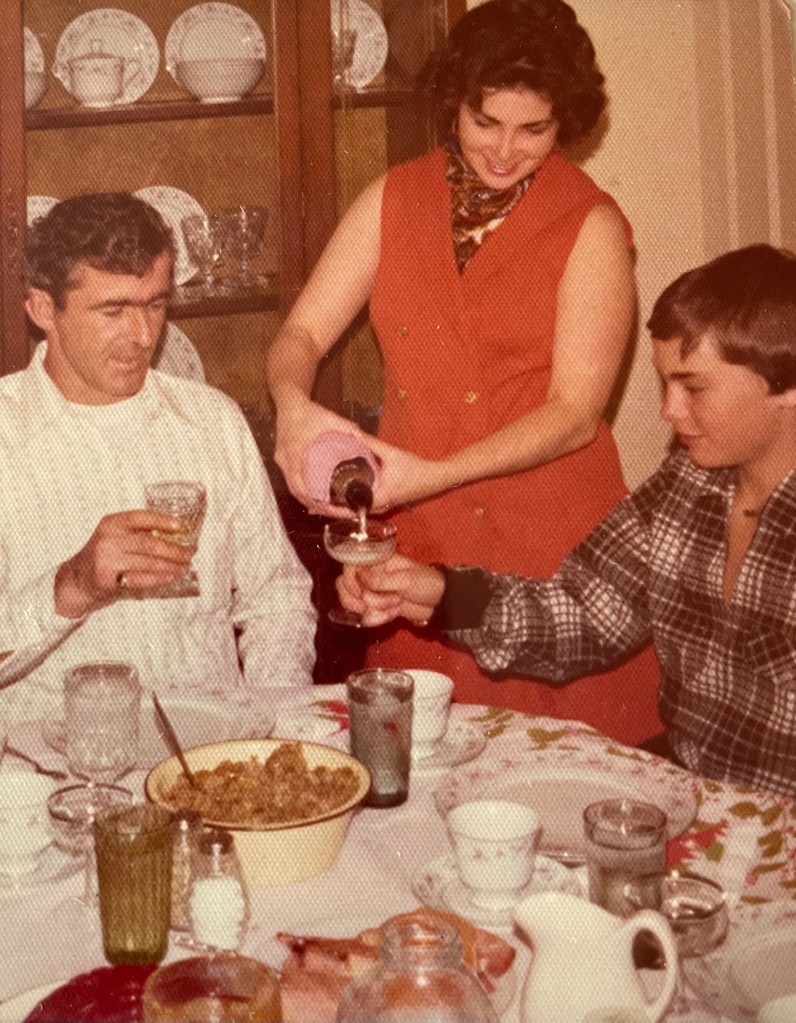
Jim Cooke wasn’t a regular drinker. When he did decide to have a drink, he’d go completely off the rails. Alcohol affects people in different ways. For my father, it ignited a madness that manifested itself in physical violence. He had been introduced to hard-drinking work culture when he moved to Britain as a 16-year-old in the early 1950s. There was plenty of post-war construction work all over Britain. London, Birmingham, Liverpool, Manchester, Leicester, Norwich, Sheffield, Newcastle, Sunderland, and many other towns across England were places where work could be found. Young Irish men in the tens of thousands migrated for work opportunities unavailable at home. It was a tough existence where it was difficult to establish roots or a family. This was the construction business, and men followed the work from town to town, project to project. Those years played a major role in molding Jim into the man he’d become.
I do wonder what his time in Great Britain was like. He lived there for roughly 20 years. Initially, he had the company of his older sister, Mary and his twin brother Frank. They were all very young when they moved to the UK. My father and Frank were still teenagers and Mary only a few years older.
Frank accompanied Jim into the rough and tumble world of UK construction work culture. It was a place full of hard drinkers and hard characters. I found a documentary that showed the plight of Irish men that lived this lonely life. It is not hard to imagine Jim Cooke as a part of that generation.
The man that my mother met in early 1970s Chicago, had, like herself, deep scars from a life that had not followed any kind of heart-warming storybook tale. They were damaged people and while that can sometimes result in the two people taking solace in each other, on this occasion it fell into patterns of unpredictable violence and chaos.
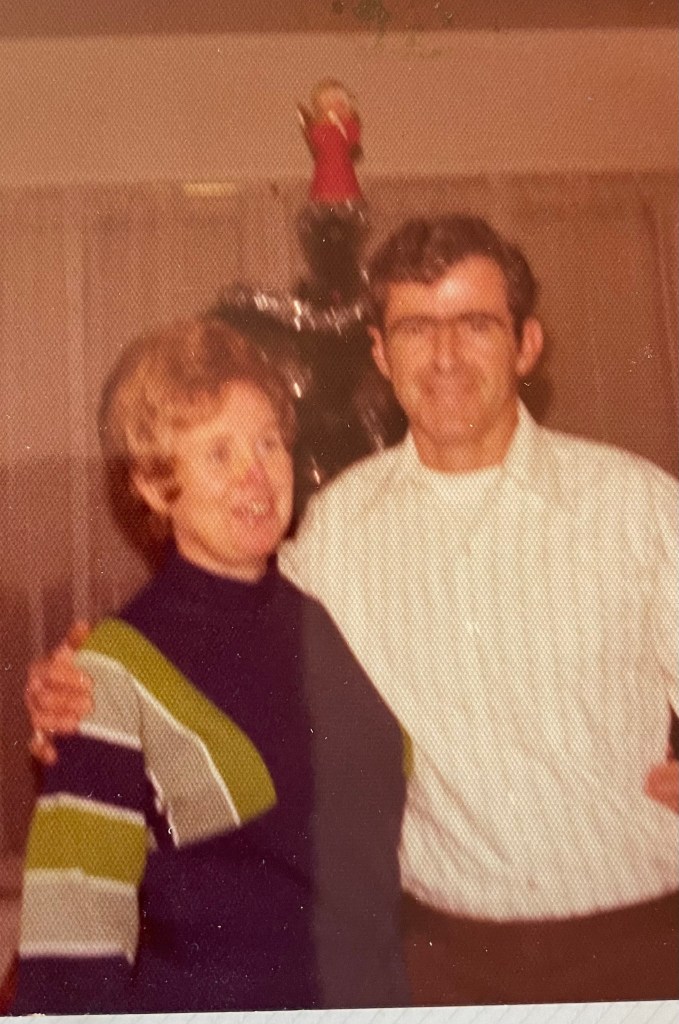
The last of those incidents occurred in late May or early June of 1980. I have no idea what triggered my father’s descent into raging madness, but it was absolutely terrifying. He came home one evening in a rage, physically flinging my mother around, followed by full-blooded slaps. Jim was built like a middleweight boxer with a workman’s strength battering my mother. I remember standing frozen still in utter terror, sobbing and screaming. The situation escalated to another level of insanity when he pulled out a gun and put it to her head. Mom was on her knees in the front room, begging for her life. Thankfully, Jim decided not to pull the trigger.
The next morning, he drove off to work. It was a sunny and warm day. Less than 10 minutes after he had departed, Mom began to frantically pack. There was a manic energy and complete focus to take the bare minimum required and escape. It was as if she expected him to arrive back home at any minute. She called our family friend Paul Lockwitch, who was married to my Mother’s second cousin Nancy. We knew them well and the relationship with my mom went back nearly 30 years. They also lived in Monroeville and we would have been regular visitors to their home. They had a swimming pool in their backyard, and a pet turtle that fascinated me. Paul and Nancy would have been only too familiar with Mom’s long, sad history with domestic abuse. The only item I cared about taking with me was my giant Godzilla toy. Mom quickly decided that Godzilla was too big and despite my tears of protest, we left him behind. Paul arrived and drove us to the Pittsburgh airport.
We flew from Pittsburgh to Chicago. From Chicago, Mom quickly made arrangements to fly to Ireland. This time we would be staying for the foreseeable future. My father did not have a passport. He had no way of getting on an international flight. I later learned as an adult that he had travelled to the US back in the early 70’s without official documentation. He was in the US illegally. Ireland provided us with not only distance but also security. We were safe.
The memory of my Father’s unhinged rage had a lasting impact on me. The level of fear I had felt was seared into me. I had no desire to see him. The subject of seeing him was a complete non-starter for me. He would never again be a part of my life. It wasn’t until I was a 32-year-old man in September of 2007 that I finally decided to meet him in Boston. At that point, Jim was an old man living a very modest existence. He passed away from brain cancer in November of 2008.
Ireland: Summer of 1980
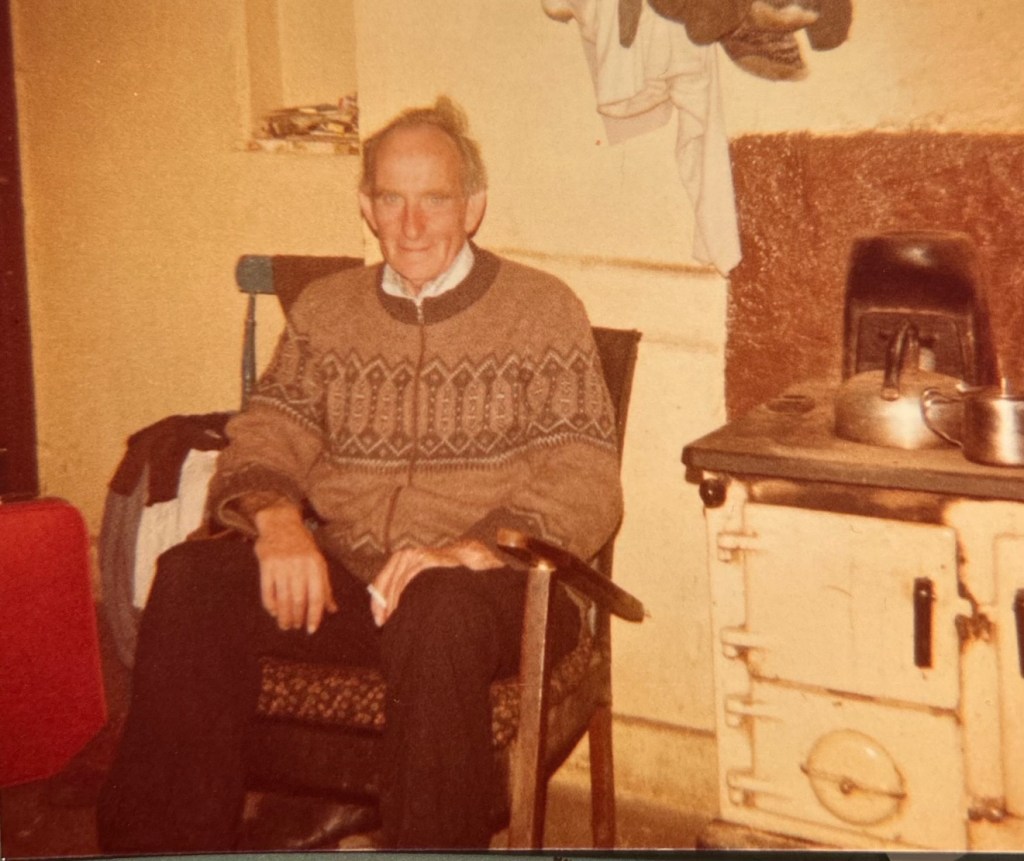
In Ireland, Mom and I found ourselves back at Uncle Sean’s. Not surprisingly, very little had changed, but circumstances would soon take an interesting turn. Shortly after our arrival, Sean’s younger brother Festy, paid a visit. Festy had made his living in London. He was married with two grown children. I’m sure that he was surprised when he came to Sean’s and happened upon us.
Festy was calm and steady. He was well into his 60’s, perhaps even 70 but still physically well able. He took to working the land and I accompanied him as he went about his tasks. Festy was quiet and decent. However, he was capable of good conversation. He had a gravelly voice that matched his physical presence and weathered exterior.
One day when I was out in the fields with him, I started talking about the turtle that Paul Lockwich had in Pittsburgh. Somehow, I got it into my head that we needed to go back to the States to get the turtle. Festy wouldn’t have known what the hell I was on about. When he didn’t immediately agree to a transatlantic flight to bring back the turtle, I was aghast. This was awful news. We had to go back and get the turtle!! I started bawling and ran back toward the house
Mom remembered hearing me roar from some distance and thought a rock had fallen on me. When she learned the reasoning for my tears, she was bewildered and amused, but mostly relieved. To be honest, I think I had the turtle’s best interests at heart. It would have been very happy in the Irish countryside.
Festy had a son, Tony, who soon came over from England for a visit. Tony was in his early 30’s, with short dark brown hair, a push broom mustache and glasses. His accent and manner were very English. That made sense, he had been born and raised in that country. Despite many similarities at surface level, primarily the land and the diet, England is a very different place from Ireland and tends to breed a very different type of person.
Tony took after his father, he was quiet and calm. He had two prized possessions, his Yamaha motorcycle and his scope rifle. Tony would put me on the back of his Yamaha and we’d tear up the road before stopping at a pub in Moycullen where he would have a pint of Guinness and I would put away a Fanta or Lilt. It was exhilarating fun riding on the Yamaha, feeling the sensation of speed and the wind whip against us as we ripped around the country roads. To this day it is the only time I’ve been on a motorbike!
Tony also introduced me to his scope rifle. He set up empty tin cans of Batchelor’s Baked Beans along a stone wall and would patiently practice his shooting. I remember how heavy the rifle was and the cold metal barrel. Looking through the scope and pulling the trigger obviously took a strength and coordination that I didn’t have as a five-year-old. I remember the power of the gun as Tony helped me pull the trigger and I felt the kick back jolt against my shoulder.
The way I’ve described Tony might make it seem like he was some sort of hell-bent for leather type. Motorcycles, guns, and beer!! That wasn’t the case at all. Tony was rather introverted and polite. I have fond memories of Tony and Festy. They were kind and patient with me.
On Sean’s sizable property there was a large stable or barn a good half mile back from the house. Normally a barn is where you would find various farm animals being housed. But in this case, the barn was inhabited by a bearded German man named Horst. He and his girlfriend had rented the accommodations from Sean. The two of them resided back there with their VW Bus parked nearby. Horst was of medium build with dark brown or black hair. His beard grew high on his cheek, and he often wore a wool, dock man’s hat. The girlfriend also had dark hair and I have a faint memory of her resembling the actress Karen Allen from Raiders of The Lost Ark. They were living off the grid, seeking a more simple existence. Well, they had come to the right place. It didn’t get much more basic than living in a barn in the west of Ireland.
Horst would at times give us a lift into town in his VW Van. There were also occasions when he drove us out to Leitir Moir to visit Patsy and Ann Connolly. Oddly, I don’t have any memories of any direct exchanges with Horst. I cannot remember how his voice sounded. It’s strange because I can distinctly remember Tony and Festy’s voices. I do remember thinking that he had such an odd name. Not too many by the name of Horst, in Chicago, Pittsburgh, or Galway for that matter.
As the summer rolled by, an awkward situation began to develop. Sean was old and beginning to fail. Festy had not just come for a summer visit. He was there to ensure that he would be in position to take over and ultimately inherit the property. He likely interpreted Mom’s presence as a potential threat to his desired inheritance. Keep in mind, Sean had offered her the property a decade prior. Festy was not about to stay in London and let that happen. Mom had written Festy the year prior to make him aware that Sean was aging and needed help. She began to read the room and sensed that perhaps we were no longer welcome guests. I don’t know if that was the case, but Mom took the decision to find other living arrangements.
Letterfrack/Renvyle: Autumn of 1980
Mom visited a job agency in Galway where she was offered a caretaker’s role in Letterfrack. She accepted the job. This meant we would be moving 50 miles into northwest Connemara near the Twelve Bens or Twelve Pins, as they are also known, a series of small mountains that make Letterfrack a picturesque area. This was even further remote than Leitir Moir. It was a two-hour bus ride from the town of Galway, as there were no expressways or trains. The ride would go along single-lane roads where speeds would vary, as would the twists and turns
Mom would be looking after a lady by the name of Mrs Flaherty. She was in a fragile state of health after a stroke and needed full-time care. The house that Mrs Flaherty lived in was far more modern and updated compared to old Sean’s place. It was a solid, good-looking house that sat on top of an incline looking out over the road. Geographically, we were somewhere between Letterfrack and Renvyle, close to Tully Cross.
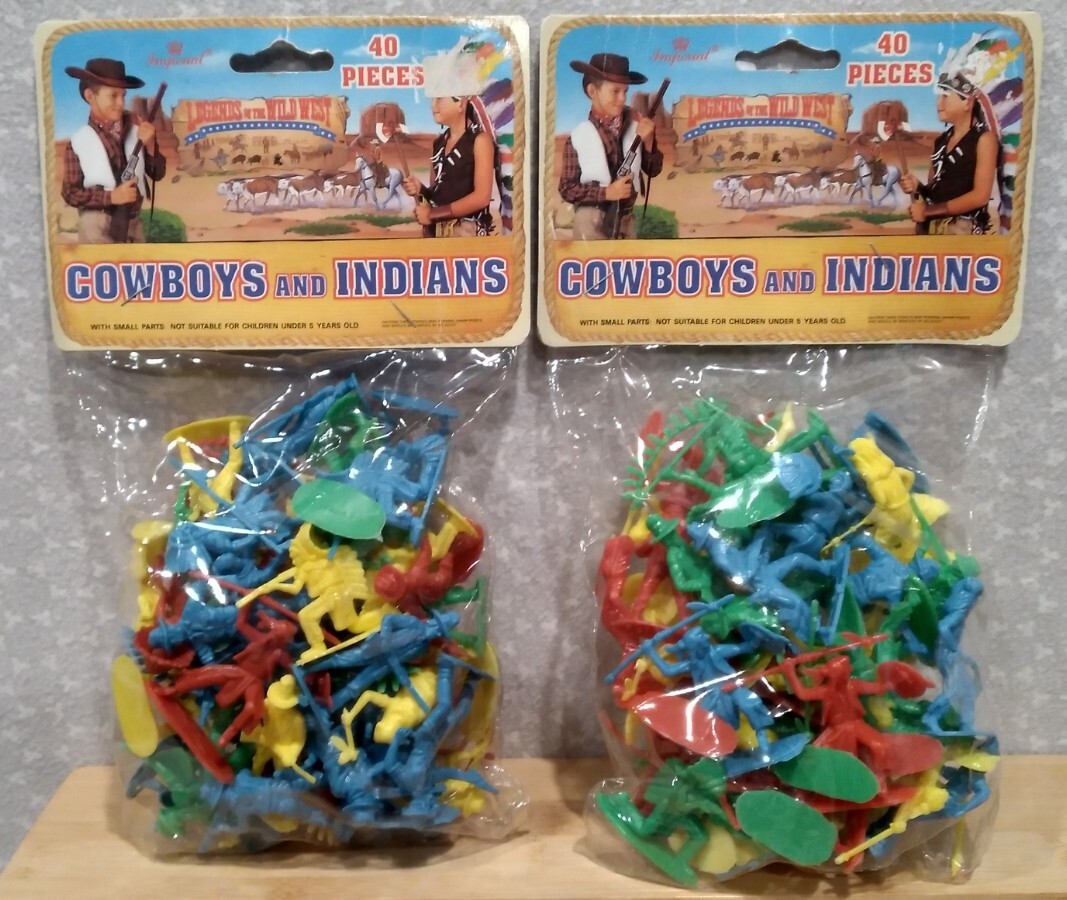
Mrs Flaherty had a son who would stop by occasionally to visit. He had a wife and young boy my age. The boy and I got on well enough and every now and then I went to their house to play. I remember we had a set of Cowboys and Indians. The figures from the old American West would come in a plastic package that contained 40 pieces. We’d set them up outside using the landscape to lay out the stage of battle. The rocks, greenery, and earth made for a great backdrop where the old west showdowns were transported to Connemara. Truth be told, the shirtless Indians probably could have done with a bit more clothing out in Letterfrack 😉 I’m guessing it might be difficult to find these types of toys today. I don’t think kids play Cowboys and Indians anymore.
I finally began to attend school. This would have been my first organized educational setting since Camelot Preschool in Chicago’s Roger’s Park in the late 70’s. Kindergarten doesn’t exist in Ireland, instead, it is called Senior Infants when children aged 5-6 begin attending school. Senior Infants sounds like a sort of unfortunate medical condition where children prematurely age, get wrinkles, and need walkers.

Tullycross National School in Renvyle was a long walk from Mrs. Flaherty’s house. It was at least 1.5 miles away if not longer. I would walk home alone or with a classmate for at least part of the journey. There was a little girl with blond hair that I recall sharing the walk with at times. It was a pleasant and tranquil experience strolling along the road.
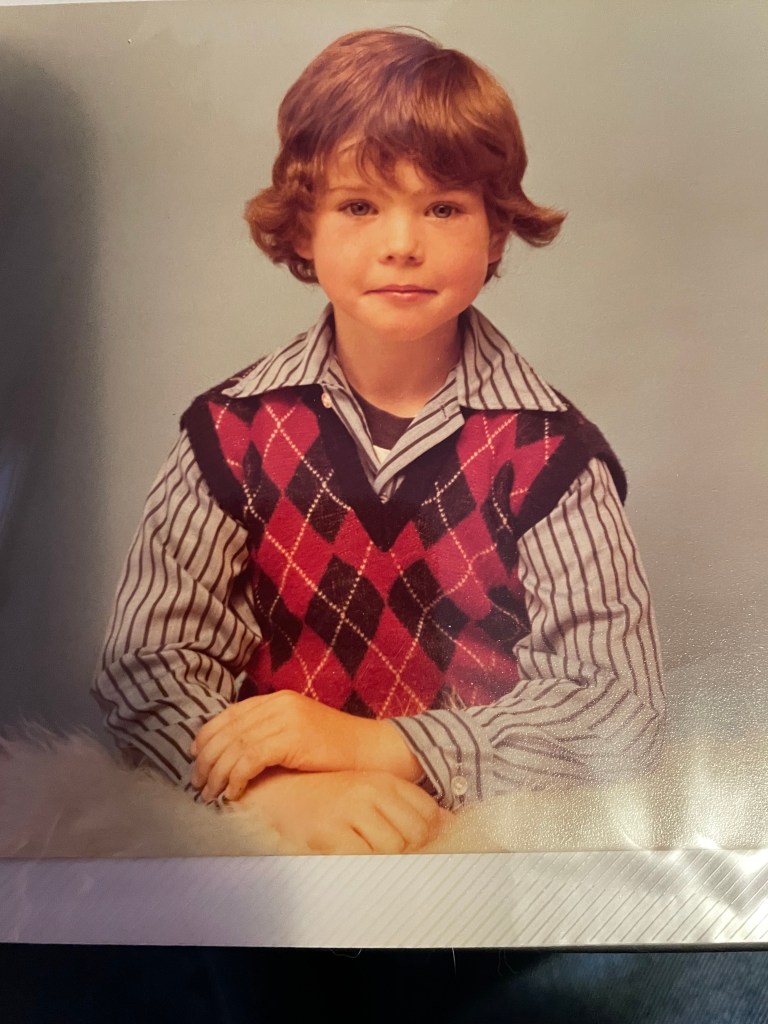
One sunny day, itself something of a rarity in the west of Ireland. I was walking along, and a wasp landed on my open palm. I remember the yellow and black markings of the insect as well as my curious fascination. There was a momentary pause as I stared at the creature. Then the wasp did what wasps do, it stung me. I roared in shock as the hot pain pulsated through the middle of my hand. I ran the rest of the way home crying. That remains the only time I have ever been stung by a wasp. It is also the reason why to this day I am still uncomfortable and twitchy if a wasp comes into my vicinity. I don’t normally kill insects, but I make exceptions for wasps. I’ll grab whatever is handy and meet out my retribution on those miserable insects whenever they get too close. Once bitten twice shy….
From Mrs Flaherty’s house, when you crossed the road and walked up a quarter mile you arrived at the Gannon’s property. They were a large family who quickly became a regular part of my life. Willy Gannon was the man of the house, and they had a load of kids. I frequently made my way over to play and venture about their property. Similar to Mrs Flahery’s house, their home sat up on an incline. The difference was that behind the house was land that continued upwards until you arrived at the top of a large stony hill. This is how the land was back in Renvyle; there were loads of stone hills and inclines speckled with rough foliage hardy enough to endure the wind and rain.
We often made our way up the stone hill, running about the area. I don’t remember many toys. I don’t know what we did exactly, but we’d spend loads of time outside. They also had a large caravan or trailer next to their home. This was another center of adventure and rambunctious activity. On one fateful occasion, I threw a rock and accidentally broke one of the windows in the caravan. I ran away and hid, frightened of the possible consequences. Mom offered to pay for the damage, but I don’t think that Willy Gannon accepted.
Their home was a safe place and they treated me well. In mid-December of 1980, I was invited over as one of the older children was celebrating their birthday. During the festivities, I walked up to Mrs Gannon and excitedly informed her, “It’s my birthday too!”. I’m sure she thought that I was telling stories, but she was kind enough to give me a pound. Little did she know that December 14th was indeed my birthday. I wasn’t having her on!
I often caught a lift to school from the Gannon’s. I can remember the rain pelting down against the car window. On one occasion I was walking alone along the road and an elderly man pulled over asking if I needed a lift. I didn’t think twice and hopped in. He was friendly enough and dropped me off at Mrs Flaherty’s. This would have been unheard of in Chicago and much of the US, but in rural Ireland this wasn’t uncommon at all.
For any kind of significant shopping outside of basic food items, Mom and I would take the bus into Galway. It was a long ride into town but something we both looked forward to. Galway is a lovely town that sits next to the Atlantic Ocean. In 1980 the population was approximately 41,000. Eyre Square is a pleasant green space that sits in the middle of the town where the buses and train station are located. The square is surrounded by hotels, restaurants, cafes, and pubs. It was a hub of activity without ever feeling hectic. The main stores were located just a short walk away from Eyre Square that is where we would head to start our day in town.
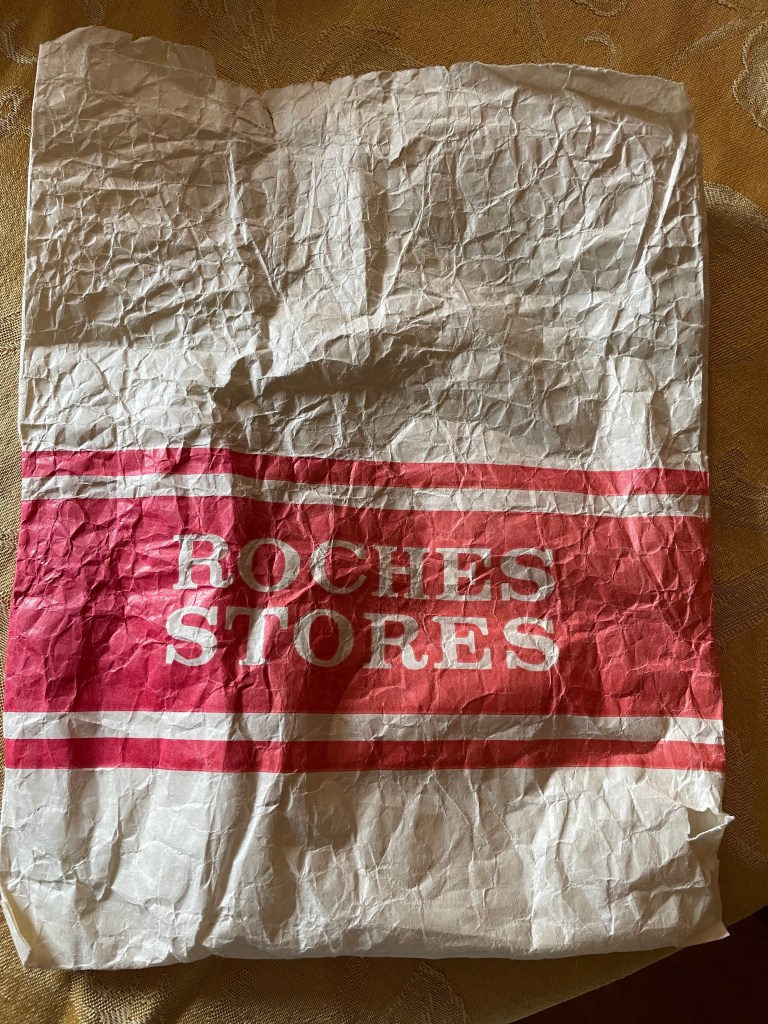
Shopping centered around Roches, Dunnes, and Woolsworth. Roches was a traditional department store in the mold of Marshall Fields or Macy’s in the United States. It had two floors and was tastefully laid out. I would head straight to the toy section on the second floor. Roches had a sizeable selection of toys. Matchbox cars featuring heavily in the displays. There were other toy car brands as well maybe not as well-known such as Majorette and Corgi. Brands that I don’t think were available in the US. I loved toy cars. The cars were marked on the bottom where they were built and it seemed they were always made in Macau. There must have been some enormous toy car manufacturing plants in Macau!
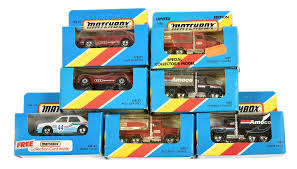
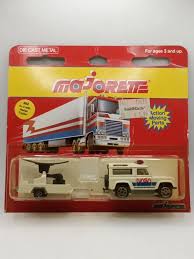
Star Wars figurines had travelled the galaxy and made their way to Galway. Mom didn’t have much money, but she usually gave in to my begging and pestering. I didn’t have many Star Wars figurines, but one I do recall having was Bossk. He was one of the bounty hunters along with Boba Fett that had been hired to find Han Solo. I hadn’t yet seen The Empire Strikes Back or even the original Star Wars, but I was fascinated with Bossk, he was a lizardman-type creature with a long space rifle in one arm. Godzilla, dinosaurs, lizardmen, I clearly had an affinity for reptilians.
We’d always get an ice cream when we were in town. My God, was the ice cream just fantastic. It was soft serve but tasted different from what you get in the States. It is richer, creamier, with more genuine flavor. It’s called Soft Whip in Ireland and is normally accompanied by a Flake Cadbury chocolate inserted on top. The visits to town would usually result in me getting a toy and an ice cream. Happy times!
There is one trip back from town that stays engraved in the memory for reasons not quite as pleasant and lovely as Ice cream and toys. We were lining up to get on the bus to head back to Renvyle. I told Mom that I needed to go to the toliet. This was a problem. If we had left the line for me to take care of business it would have meant another 2 hour wait for the next bus. “Just hold it until we get home.”, was Mom’s response. I was tired and glumly climbed aboard the bus to take my seat.
Shortly after we departed, I gave Mom a foreboding update. “Mom, I gotta go poo…..”. Mom hedged her bets and told me, “Go to sleep and we’ll be home soon.” Wishing the situation away, I closed my eyes and drifted off to sleep. We arrived at our stop, and I was awakened to get up and off the bus. As I rose to leave I felt a warm unwelcome guest in my trousers. I instinctively squeezed my butt cheeks together to try and keep the smelly load from spilling down my leg. We crossed the road and made our way to Mrs Flaherty’s house. Mom knew the nastiness that awaited us.
We hurried our way to the bathroom, where I was quickly stripped of my clothing. The damage was assessed, and it was considerable. A veritable Poopapolooza it was. Poop was all over my backside and legs. The clothes were put in the rubbish. I was then herded into the shower where I would stay for a good while getting washed. This was a team effort by Mom and a kind lady named Eileen Henew. Eileen normally stopped by to help at Mrs Flahery’s once or twice a week. This particular occasion was certainly more work than she bargained for! Despite a shitty end to that day, I have fond memories of my trips to Galway from Renvyle.
My first, lasting impressions of Irish television began to stick around this time period. On Saturday mornings, there were two shows I loved. The first was the old Pink Panther cartoon. The iconic music created by Henry Mancini welcomed the viewer to a different but fantastic atmosphere. There was an element of cool to the introductory theme. The images were abstractly unique for a cartoon marketed to children. Pink Panther wasn’t there to make a fool of himself to entertain the audience. He was too cool for any of that malarkey.
The Pink Panther was largely without dialogue. This lent an air of mystery and ambiguity to the cartoon I’ve always appreciated. I imagine the lack of dialogue made it far easier to export internationally. Even the cartooning was unconventional and Avant-garde. The Pink Panther’s main foil on the show was usually an oddly shaped rotund man with an oversized head and nose. The man almost invokes a short, contorted version of Charles DeGaulle. There are genuine grumpy Frenchmen tendencies in the character. I’m willing to wager that Andy Warhol and Picasso both liked The Pink Panther. I can easily see Warhol hosting parties where there would be a room playing Pink Panther cartoons as people did …..whatever it was people did at Warhol’s soirees.
The other show that I looked forward to watching was “Anything Goes”. This program was geared toward young kids and was hosted by one Aonghus McAnally. That is one hell of a name. My primary recollection wasn’t of Aonghus but rather the birthday segment. Each week ‘Anything Goes’ would run a list of local children’s birthdays. The backdrop showed a birthday cake being held up by two bakers who looked like Oliver Hardy from “Laurel and Hardy”. The image of the podgy bakers holding up the cake was accompanied by the song “Happy Birthday” by Stevie Wonder. The names of the children would roll down the screen along with their ages and area they hailed from. The song has always stayed with me. It has an infectious groove married with a joyous feel-good vibe that pulls you into the celebration. The appeal is very similar to Kool and the Gang’s ‘Celebrate’. What is just remarkable is that I didn’t heard the song for decades after I moved back to the US. Recently, I learned that the song is played frequently in the African American community in the States. That makes perfect sense since the song celebrates Martin Luther King. The best birthday song by some distance in my opinion. Good work Stevie!
Soon enough, winter had arrived. On Christmas Day of 1980 the Gannons sent for me to come up the road and join them. Christmas really is for children and being able to celebrate the day with the Gannon’s brought an excitement, liveliness and joy to the occasion. They were very thoughtful people and made our time in Renvyle special because of their kindness. I wish I had a photo of them that I could share.
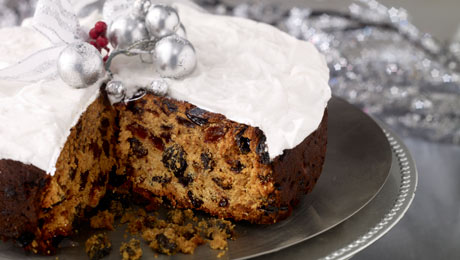
This is likely where I first tasted Irish Christmas cake topped with Marzipan frosting. The distinctive smell of the marzipan is another memory activator for me. It takes me right back to a place and time. Once I moved back to the US, I never encountered the aroma of marzipan until decades later when I stepped into a European style bakery in Chicago. That specific type of baking ingredient is not a part of mainstream American baking culture. I find it odd that such a prevalent European flavoring never took root and thrived in the States.
Letterfrack/Renvyle: 1981
1981 was upon us and we had settled into life in Renvyle. This is where I would learn to read in English and Irish. It was compulsory to learn Irish at school, especially in Connemara where the language holds special value. My sisters had sent me books for my birthday and Christmas. I quickly took to them and learned to enjoy books.
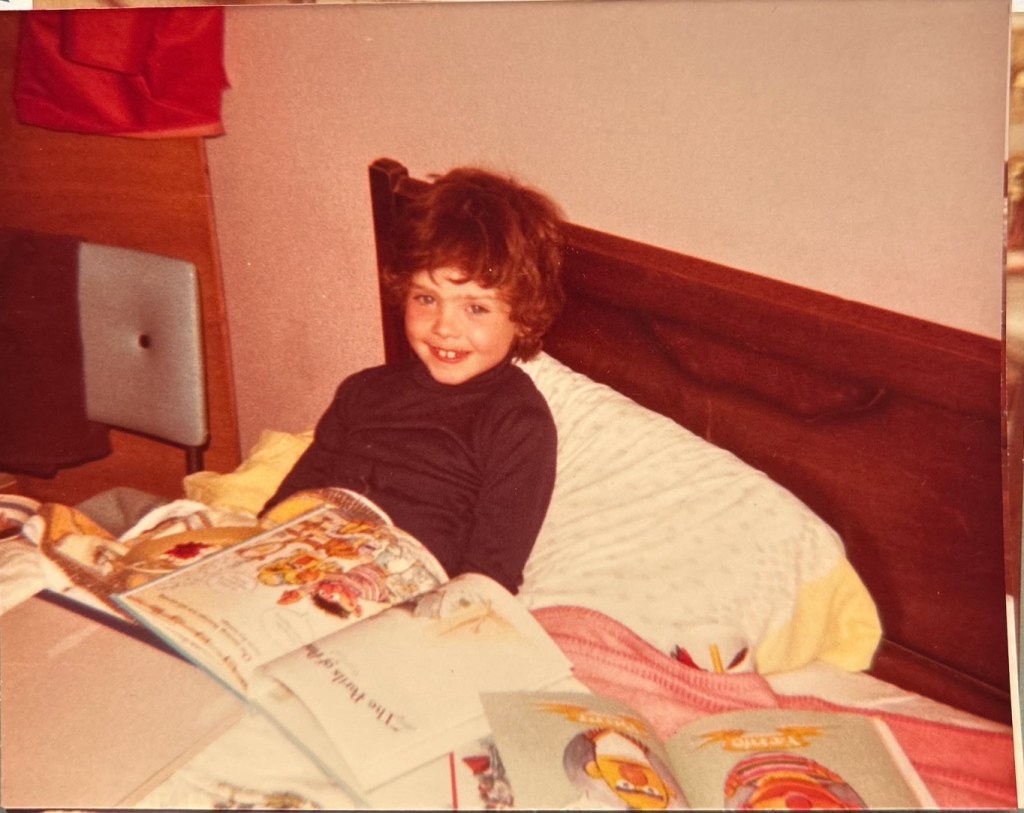
The memories of school are vague. I cannot recall my teacher’s name nor the full name of a classmate. There was a boy with the last name Wallace. The large, grey concrete building and the surrounding asphalt, I can still see. Yet, I struggle to remember the interior of the school. It was the journeys to and from school that claim the memory space in my head.
One day while walking home from school, I was caught in a heavy downpour. I arrived at the house completely soaked. It was chilly that day as well. Even though I changed clothes as soon as I came home, I caught a cold. I was kept from school for a few days. Mom was out shopping and Eileen Henew stopped in to have a look at me. She didn’t like what she saw and called for the doctor. It was the right decision. The doctor made a house call and quickly deduced that I had caught pneumonia. I was immediately put on penicillin and would remain home from school for weeks. It took me some time to recover from my bout with pneumonia. As I was recuperating, we were visited by a special guest.
My sister Ann had flown over from Chicago to see us! I was delighted to see her. It was so odd to see someone with whom I only had the association of knowing from Chicago. It was surreal to see her in Ireland. Ann was just twenty-three years old with her long blond hair, blue eyes and homecoming queen traditional good looks. She had a confident, smiling, assertive American way about her.
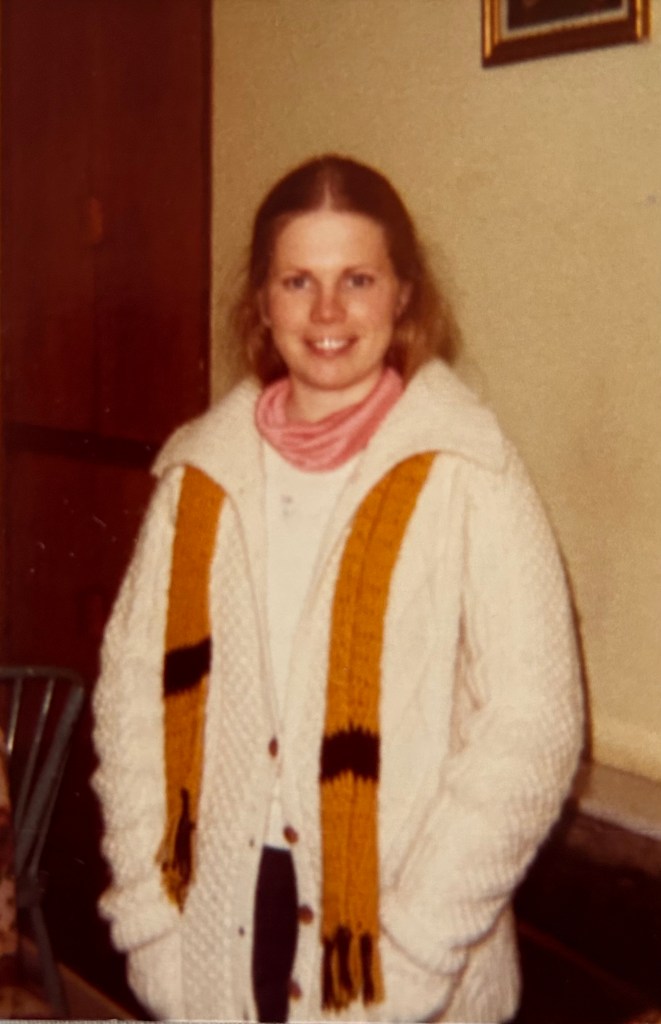
She had flown into Shannon Airport and then took a lift from a complete stranger who offered to drive her to Barna! Her first stop was at old Sean’s place where she sat down with Festy. One of her first questions to Festy was if Mom was going to be left any of Sean’s land. Ann had no issue going directly to the point. That certainly was the American in her! Festy didn’t give much away about the land. Instead, he gave Ann a big plate of eggs, bread, and bacon and told her, “Get that in ya’.”
My sister soon made her way to Renvyle and was struck by how remote it was. After a few days, we headed into Galway. One of the main objectives of this trip was to get me a haircut. Seems as one of the side effects of being in bed sick for weeks was that my hair started to look like I wanted to go back to the 1970’s. Well, I was soon brought back to the 1980’s by getting into a barber’s chair in Galway. Once the hair was taken care of, we had an ice cream of course.
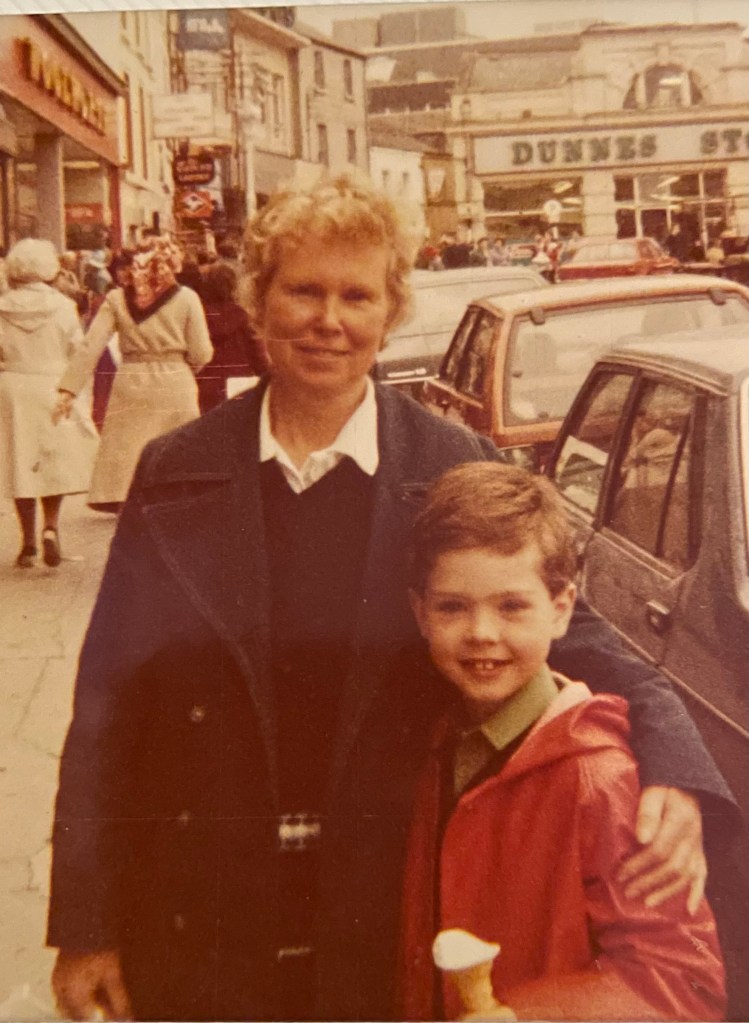
Ann was only with us for maybe a little over a week, luckily, she managed to take pictures. These are the only photos that I have from my time in Renvyle. The photos effectively capture the simple, hard beauty of the land, the greyness of the sky, and the damp cold that was seemingly almost ever-present.
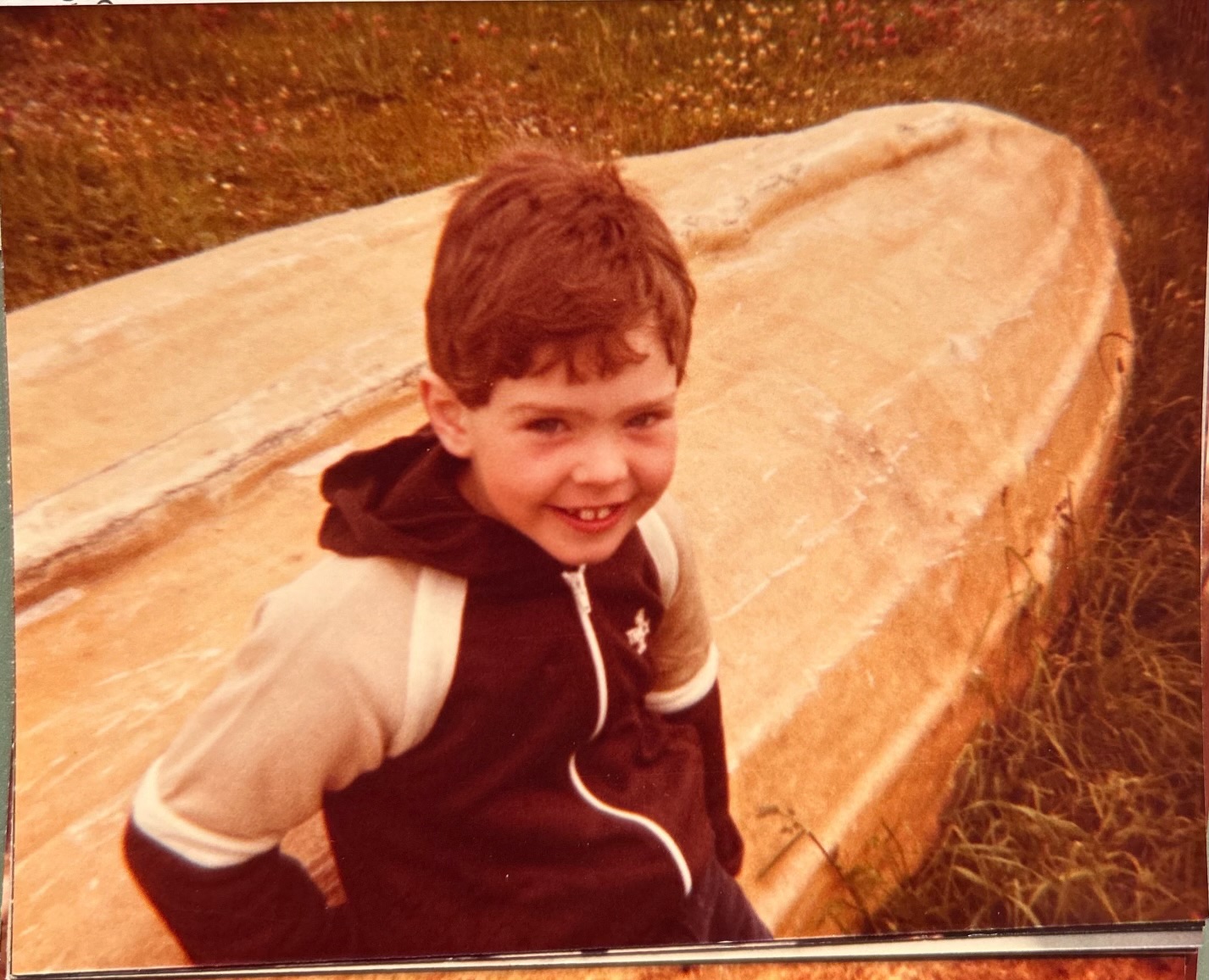
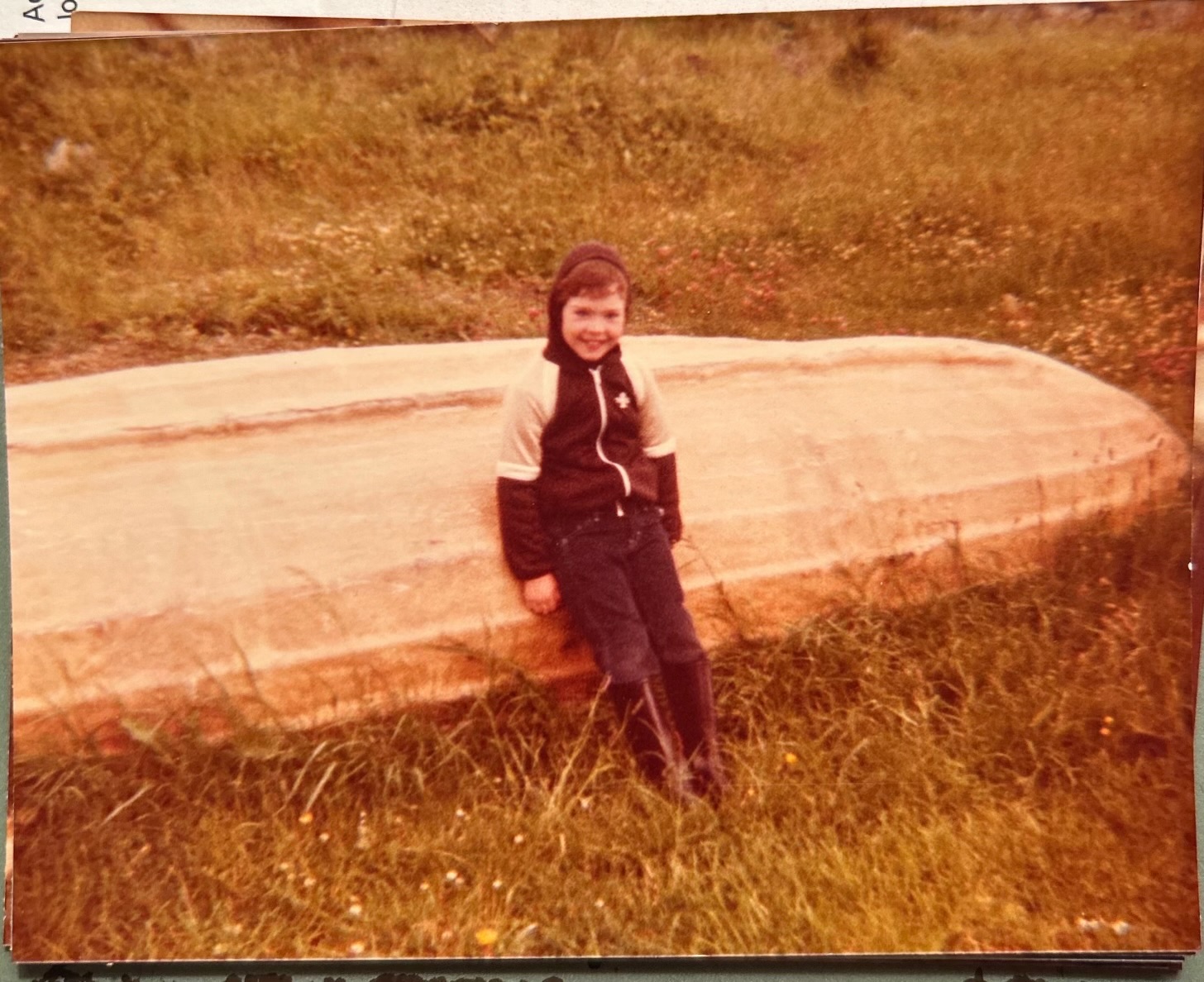
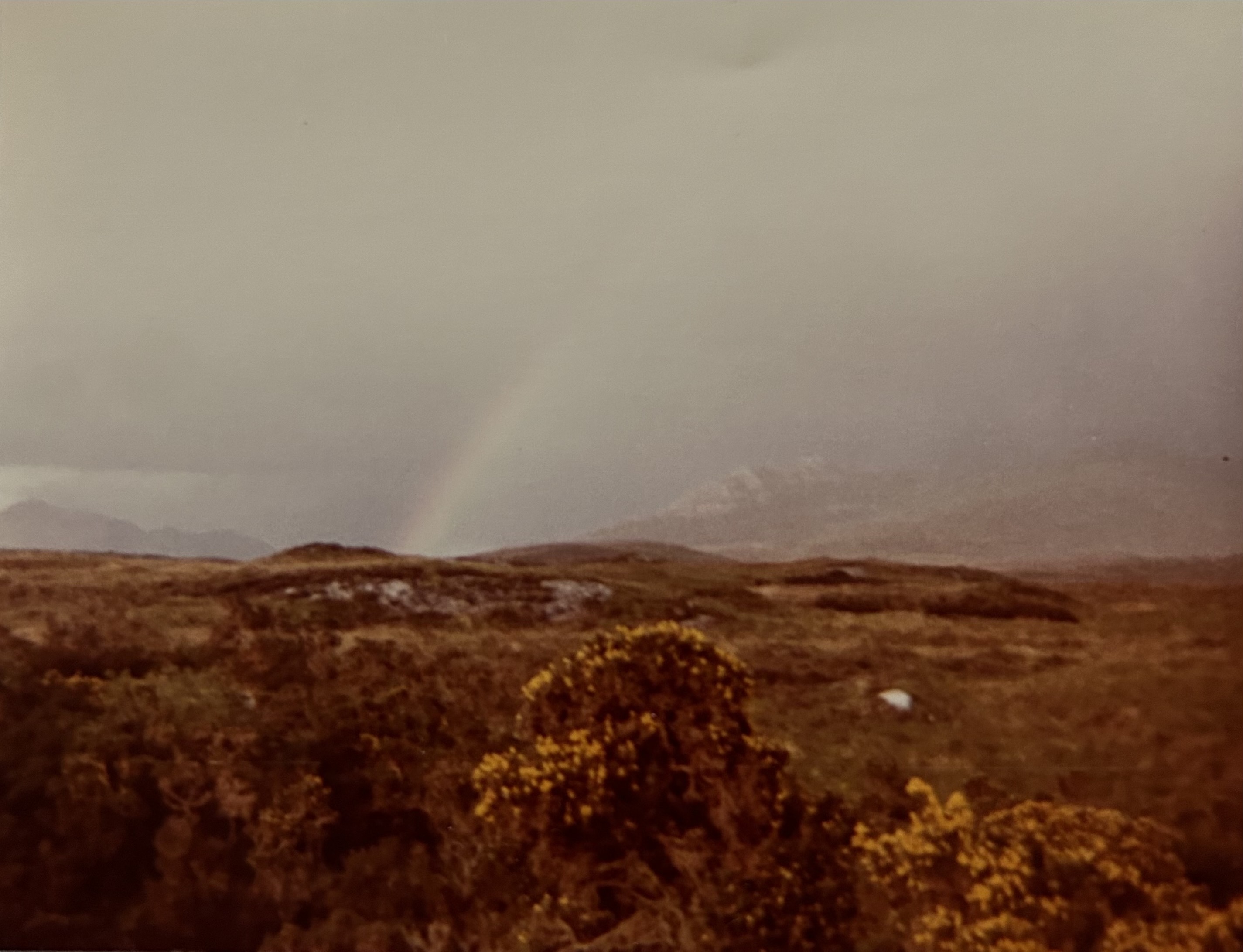
For Ann, Ireland had never been a part of her formative experience. Our mother and her Father, a Kerry man, had never openly reminisced or spoken fondly of Ireland. For Ann, Ireland represented an austere place riddled with stories of hardship for her parents. I think this was especially true for her father. However, our mother always held onto her affinity for Ireland after 30 arduous years in the States. Ann departed Galway for a short stay in Dublin before traveling to England to visit her Aunt on her father’s side. She remarked on how modern England was in comparison to Ireland. Ann never again visited Ireland. Once was enough.
The school year concluded at the beginning of July. Mom decided to leave Renvyle and return to Barna. This was driven largely by her job responsibility with Mrs Flaherty that required physically moving her from a wheelchair to the bed. Mrs Flaherty was not a petite woman and mom feared that the strain of pulling her up and moving her about could provoke an injury. Mom was 50 years old and well-able physically, but she must have sensed her limits. This also stayed true to a pattern of behavior with my mom where she could never seemingly stay in one place very long.
We bid goodbye to the Gannon’s and the isolated beauty of Renvyle, returning to the familiar surrounds of Barna.
 Gospel Outreach School and High School Memories 1988-1992